Chester Confined Space Cleaning for Safer Planned Entry and Better Contamination Control
Chester Confined Space Cleaning for Safer Planned Entry and Better Contamination Control
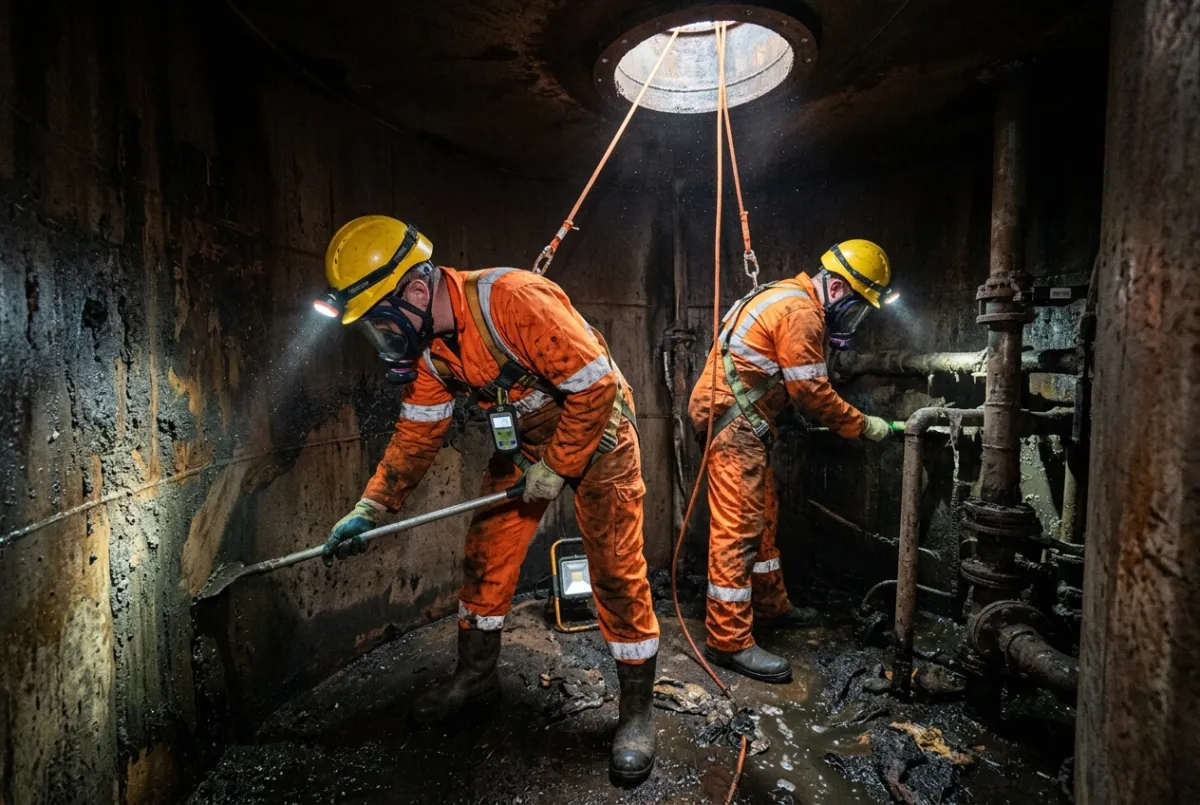
Confined spaces create a very different cleaning challenge from open industrial areas. Once the task involves tanks, pits, chambers, ducts or other restricted-access structures, the focus shifts from simple cleaning efficiency to safe entry planning, contamination control and emergency readiness. Across Chester, Ellesmere Port, Deeside and the wider Cheshire market, confined space cleaning is used where enclosed industrial areas need a carefully controlled method rather than a routine site-cleaning approach.
Alternative Cleaning Solutions NW Ltd promotes industrial cleaning around operational factories, warehouses, engineering environments and commercial industrial premises across Chester and Cheshire. In that context, confined space cleaning is best treated as a planned industrial operation: the scope must account for the condition of the space, the nature of the contamination and the practical demands of entry, supervision and rescue readiness.
What confined space cleaning usually covers
Typical scope may include tanks, pits, vessels, chambers, ducts, enclosed service voids and other spaces where access is limited and the environment must be assessed before entry. The aim is to make the space cleaner and more manageable while controlling the risks that come with restricted movement, potentially unsafe atmospheres and difficult extraction conditions.
Confined work often overlaps with other services. Residue-heavy enclosed areas may also require industrial degreasing and deep cleaning where oily or process contamination has hardened over time. On sites where approach routes, elevated access points or adjacent structures also need attention, the wider plan may include high-level and access cleaning before the restricted-area team even begins entry preparation.
Why Chester operators plan confined space cleaning carefully
The risk profile changes dramatically when cleaning moves into enclosed or largely enclosed areas. HSE explains in its guidance on confined spaces that specified risks may include fire, explosion, loss of consciousness, asphyxiation and drowning. It also stresses that work in a confined space should be avoided where possible and otherwise assessed and planned with suitable controls and emergency arrangements.
For Chester industrial operators, that means confined space cleaning should never be priced or scheduled as if it were just a standard tank washdown. Atmosphere checks, ventilation, safe isolation, trained personnel, communication and recovery planning all influence how the work is delivered and how long it is likely to take.
Budget expectations and likely programme length
ACS does not list fixed confined-space prices, which is appropriate because the scope can vary dramatically. As a broad guide, smaller limited-entry cleaning tasks in Chester may begin in the high hundreds where conditions are straightforward and the work is tightly defined. More complex spaces, heavier contamination, staged entry arrangements or higher control requirements often move into the low thousands and sometimes beyond.
A short planned-entry clean may fit into one maintenance window. More complex spaces often require staged preparation, testing, equipment setup, controlled cleaning time and formal handover, which can extend the programme across one or more days.
| Confined-space cleaning format | Best fit | Typical timing | Main benefit |
|---|---|---|---|
| Single-entry clean | One defined tank or chamber | One maintenance window | Fast local contamination control |
| Staged confined clean | Larger or more complex enclosed spaces | 1-2 days | Better control of entry and handover |
| Shutdown-linked confined clean | Restricted spaces released during outage | 1-3 days | Safer integration with maintenance |
| Recurring specialist clean | Spaces with repeat build-up | Scheduled attendance | More predictable planning |
How to manage confined cleaning more effectively
Decide whether entry is truly necessary
The first question is always whether the task can be avoided, reduced or completed by another safer method. If entry is necessary, the space then needs a realistic assessment based on actual hazards rather than habit.
Plan the clean as part of the wider maintenance sequence
Confined spaces rarely exist in isolation from the rest of the site. The best results come when the cleaning work is aligned with maintenance, inspection and access planning so that staging, labour and release windows support each other.
Use relevant North West examples without copying them blindly
Some operators compare how other industrial sites structure difficult-access work. For instance, it can be useful to review how commercial exterior cleaning in Manchester is scheduled around access and live operations, then apply the same disciplined planning mindset to confined work, even though the hazard profile itself is very different.
Signs confined space cleaning needs earlier planning
If restricted areas are being left until shutdown week, if maintenance teams keep losing time making enclosed zones ready for entry, or if risk assessments regularly uncover heavier contamination than expected, the cleaning element is probably being planned too late. Earlier scoping usually produces safer delivery and fewer surprises.
FAQ
What counts as a confined space for cleaning work?
It is usually an enclosed or largely enclosed area with a reasonably foreseeable specified risk, such as low oxygen, harmful fumes, flooding or another dangerous condition.
What affects confined-space cleaning cost in Chester?
The biggest factors are entry complexity, contamination type, ventilation and rescue requirements, equipment, duration, number of entries and the wider industrial setting around the space.
Can confined-space cleaning happen during normal operations?
Sometimes, but many sites prefer planned maintenance windows so access, isolation and emergency arrangements can be managed more effectively.
Why should confined-space work never be treated as routine?
Because the risk profile is fundamentally different from open-area cleaning and the method must account for atmosphere, rescue readiness, competence and safe entry controls.
CTA
If your site needs a carefully planned confined-space cleaning programme in Chester or the wider Cheshire area, request a quote from Alternative Cleaning Solutions NW Ltd in Chester for a scope built around safer entry planning and controlled industrial contamination removal.
